
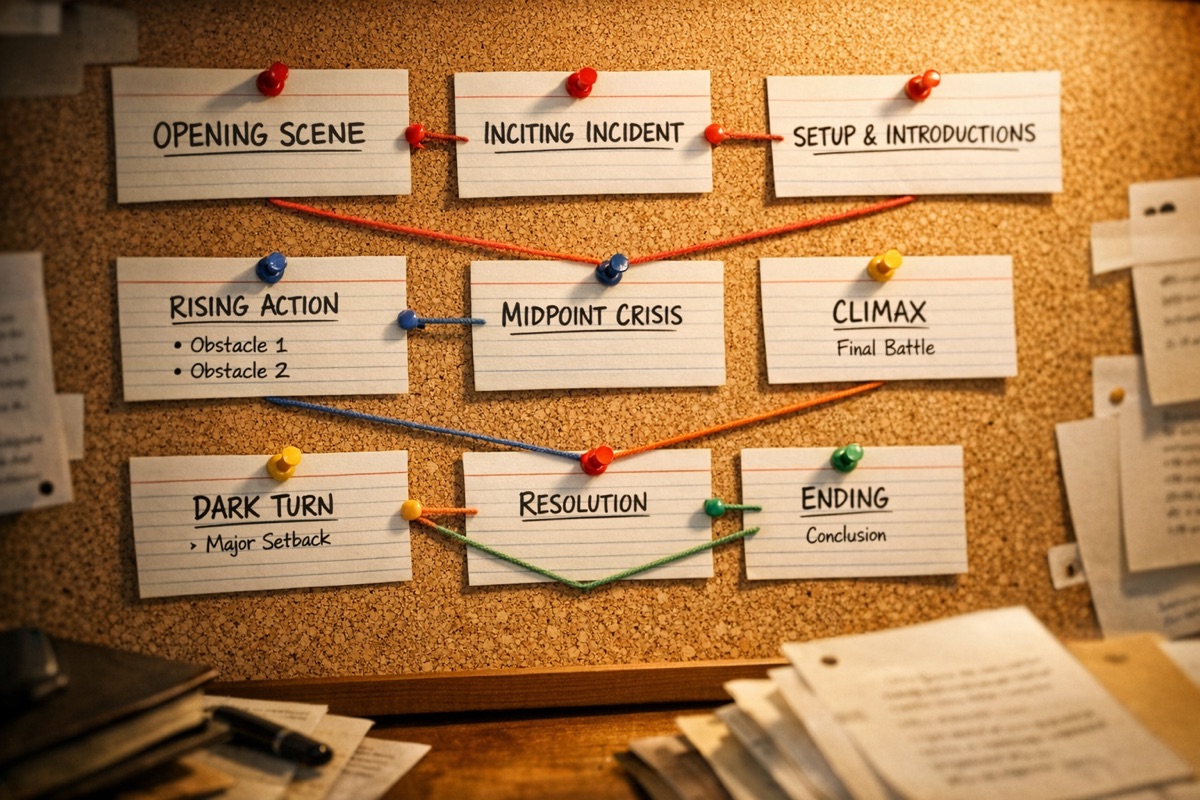
How to outline a novel
Not every writer wants a detailed outline, but most novels benefit from some kind of map. An outline can be loose or formal, short or scene-by-scene. What matters is that it helps you see the shape of the book before you are too deep in the draft.
A good outline does not lock the story in place. It gives you somewhere solid to start.
Why outline at all?
Even a simple outline can help with:- Fewer dead ends: You are more likely to catch missing motivations, weak turns, or plot holes early.
- Better pacing: It is easier to see where the story sags or rushes when the whole arc is visible.
- Faster drafting: You spend less time deciding what happens next every time you sit down to write.
Common outlining methods
There is no single correct method. Pick the one that matches how your brain works.The three-act structure
Useful if you want a clear beginning, middle, and end with obvious turning points. It gives you a high-level frame for the novel without forcing too much detail too early.The beat sheet
A beat sheet breaks the story into key moments. It is helpful when you want to pressure-test pacing and make sure the book keeps moving.The snowflake method
This approach starts with a short summary and expands in layers. It suits writers who want to build gradually from concept to full outline.The scene list
A scene list is often the most practical option. Write one line for each scene, what happens, who is there, and what changes. Then move scenes around until the sequence feels right.Outlining in practice with Plotten
Plotten is well suited to outlining because the project structure already breaks a book into workable pieces:- Start a project and choose a novel template.
- Add major sections such as acts or parts if you use them.
- Add chapters and scenes beneath those sections.
- Give each scene a short working title that captures its job in the story.
- Attach research, character notes, or setting details to the scenes that need them.
- Rearrange scenes and chapters as the structure improves.
From outline to draft
The best outline is the one that keeps you moving. If it is so rigid that you stop using it, it is too detailed. If it is so vague that it cannot answer basic questions about the next scene, it probably needs a little more structure.As you draft, let the outline change. That is normal. The point is not to predict every sentence. It is to give the story enough shape that you can keep building it without getting lost.
Plotten is available on the App Store if you want to outline scene by scene in one project.